
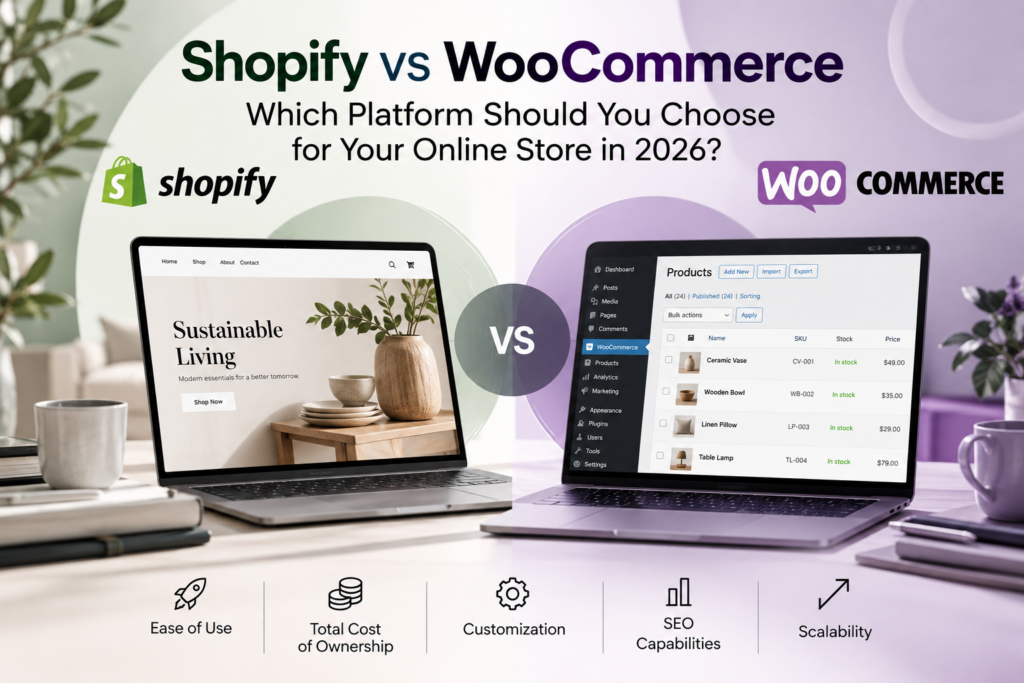
The experts at DITS Agency have published a detailed comparison of Shopify and WooCommerce, two of the most popular eCommerce platforms. The article explores their key features, total cost of ownership, SEO capabilities, scalability, and technical requirements.
We've summarized the main takeaways to help you evaluate the advantages of each platform.
Shopify: Ready-to-Use Infrastructure and Simplified Management
Shopify is a cloud-based eCommerce platform that provides the infrastructure needed to launch and manage an online store. Hosting, security, and platform updates are included in the subscription, allowing businesses to focus on sales and growth.
However, expanding functionality through third-party apps and custom integrations can increase recurring costs.
WooCommerce: Flexibility and Custom Development Opportunities
WooCommerce is a WordPress-based eCommerce solution that offers extensive customization options.
The platform allows businesses to manage their own technical infrastructure, select integrations, and develop functionality tailored to specific business processes. However, this flexibility comes with additional responsibilities for hosting, security, updates, and ongoing technical maintenance.
Total Cost of Ownership: Which Is More Cost-Effective in the Long Run?
Comparing these platforms based solely on subscription fees does not provide a complete picture.
For Shopify, businesses need to consider subscription plans, paid apps, transaction fees, and additional integrations. With WooCommerce, the main expenses typically include hosting, development, extensions, and ongoing maintenance.
The overall cost depends on the store's size, functional requirements, and long-term business goals.
SEO and Scalability
Both platforms provide tools for search engine optimization and can support large-scale eCommerce projects.
When choosing a platform, it's important to evaluate how effectively it supports product catalog structure, technical SEO, website performance, content management, and integrations.
Which Platform Should You Choose?
Shopify is often a suitable choice for businesses looking for a fast launch, predictable infrastructure, and minimal involvement in technical maintenance.
WooCommerce is worth considering when a project requires custom functionality, complex integrations, or full control over the online store's technical infrastructure.
There is no one-size-fits-all solution. The right platform depends on your business objectives, budget, technical requirements, and long-term growth strategy.
For a more detailed comparison of Shopify and WooCommerce, including SEO, costs, and scalability, read the full article by DITS Agency:
Shopify vs WooCommerce: Which Is Better for Your Online Store in 2026?